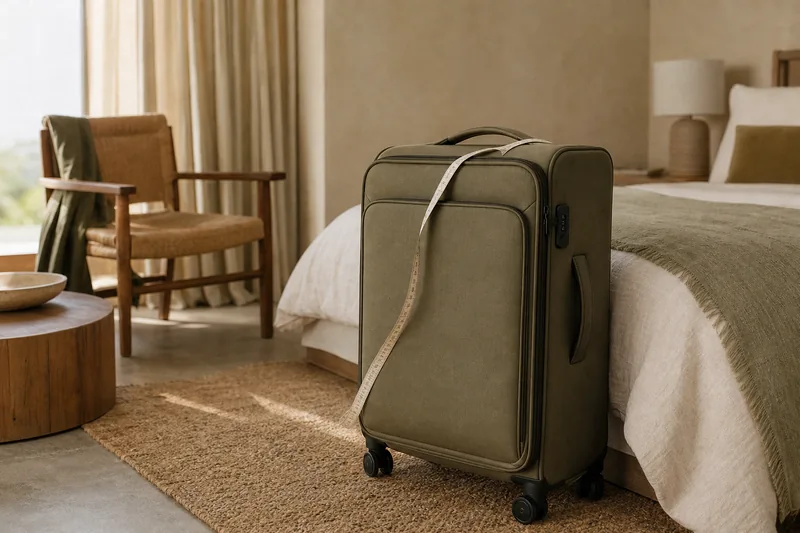
There is no single cabin-bag size that every airline, fare and aircraft accepts. A useful size guide therefore begins with a checking method, rather than a universal number printed in a large table.
The dimensions you need belong to the particular piece included in your booking. That might be one small bag under the seat, a larger bag for an overhead compartment or a combination governed by additional conditions.
Find four separate pieces of information
Record the permitted number of pieces, maximum dimensions, any weight limit and any conditions attached to the allowance. A line that says “one cabin bag” without those details is not enough to settle whether your chosen luggage fits.
GOV.UK directs passengers to check bag size and number with their airline. IATA also states that allowances may vary by airline, cabin class and aircraft. These are good reasons to use the official booking and carrier page as your starting point.
Read the dimension order carefully
Airlines and luggage brands may label dimensions differently. Identify which measurement describes the tall side, the wide side and the front-to-back depth, then compare the actual exterior. Include wheels, fixed handles and protruding packed pockets where the allowance specifies them.
Volume in litres cannot establish this fit. Two bags with similar capacity can have different shapes. Likewise, a bag that closes successfully can still be too deep. Use our measurement walkthrough for a repeatable home check.
A dated example, not a universal chart
The easyJet page reviewed on 3 November 2026 distinguishes:
| Bag entitlement described by easyJet | Maximum external size on the reviewed page |
|---|---|
| Small underseat cabin bag | 45 × 36 × 20 cm |
| Large cabin bag, where entitled | 56 × 45 × 25 cm |
Both measurements include handles and wheels. The reviewed page says a large bag can be added or be included under applicable benefits; the larger dimensions do not mean that bag is included with every booking. Read the current policy and your booking for the relevant conditions.
We do not extend this example to other airlines or present inaccessible policies as verified facts. A long comparison table becomes misleading if its fares, dates and source pages are not maintained together.
Check the complete itinerary
If you booked different airlines for the outbound and return journeys, check each one. If a connection uses another operating carrier, identify which conditions apply to the actual flight. Record anything you need the airline to clarify rather than choosing the most generous number found online.
Also separate airline baggage conditions from airport security restrictions. A bag may fit the airline’s size allowance while its liquids or batteries still require different handling. The UK liquids guide explains why the departure and connecting airports matter too.
Make a small verification record
Save the policy link with your booking details. Note the date you checked it and whether an extra bag was purchased. Reopen the live page before departure if there is a long interval between planning and travel.
For a quick home comparison, enter your verified allowance and packed bag dimensions in the bag-check worksheet. It checks the numbers you supply without treating an example airline preset as official approval. The final decision remains with the carrier and the applicable rules at the time you travel.