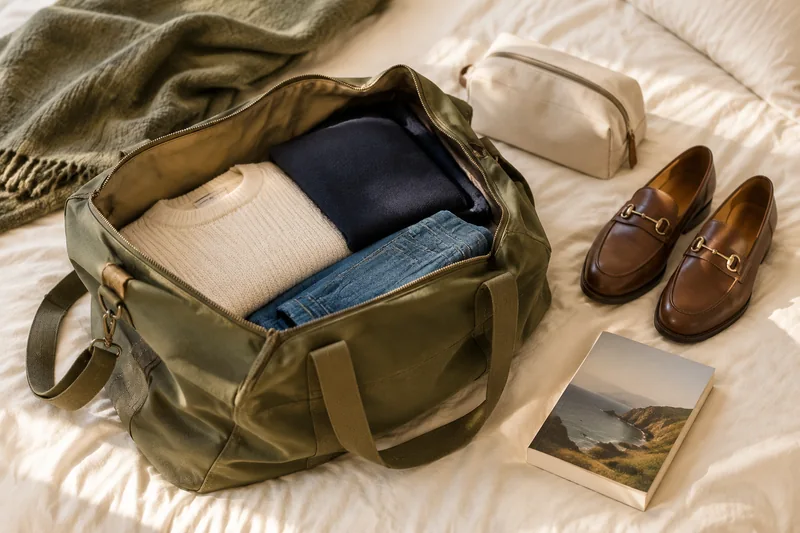
Packing for seven days becomes easier once you decide what happens to your clothes halfway through. Will you use a washing machine, a paid laundry service or a small hand wash? Or do you need to carry enough clean clothing for the whole week? Each answer leads to a different, perfectly reasonable bag.
A one-bag plan is useful only when it supports the trip. Equipment for work, disability-related needs, specialist activities or personal care may take priority over reducing the clothing count.
Make the laundry decision first
Check the accommodation details rather than assuming that a machine, detergent or drying space will be available. Ask about access and charges if the listing is unclear. A shared machine that is available only during your sightseeing hours may not solve the problem.
If you plan to wash clothes, leave enough time for them to dry before moving on. Keep a clean change available while the wash is in progress. Our travel laundry routine explains a small system without treating a hotel sink as a guaranteed laundry service.
Build a sample clothing rotation
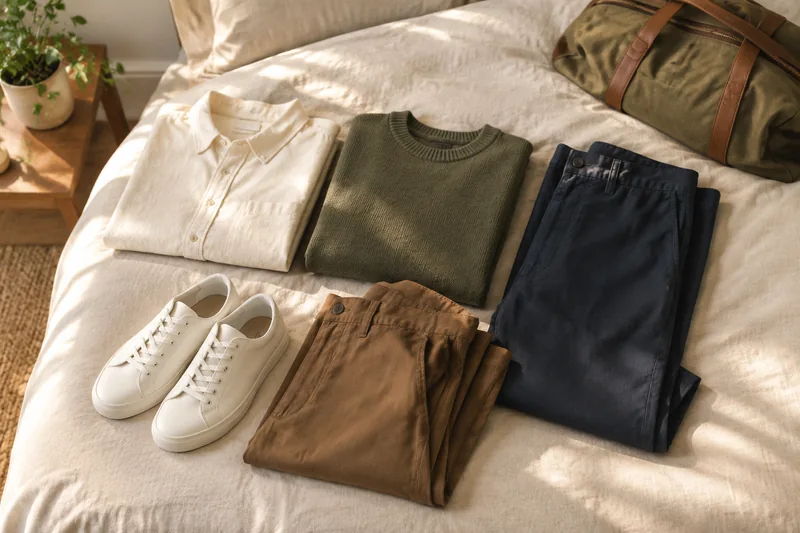
For a casual, mild-weather trip with a midweek wash, a possible starting point is four tops, two bottoms, a light layer, sleepwear and an appropriate supply of underwear and socks. Include what you wear in transit when you count the total. These quantities are editorial examples; weather, activity, comfort and your own routine decide the final list.
Try pairing each top with the bottoms you chose. Remove the piece that works with only one other item unless it serves an important occasion. If the trip includes a formal event, build that outfit deliberately rather than hoping casual clothes will cover it.
Give each bulky item a job
Shoes, coats and toiletry containers usually deserve attention before you worry about how tightly a T-shirt folds. Start with footwear suited to your main activity. A second pair should solve a different, real need.
Decant familiar toiletries only when the container is suitable, clearly labelled for your own use and compatible with the applicable airport rules. Keep medicines in appropriate packaging and check their separate requirements. Do not sacrifice essential items merely to reach a small-bag ideal.
Divide the bag by use
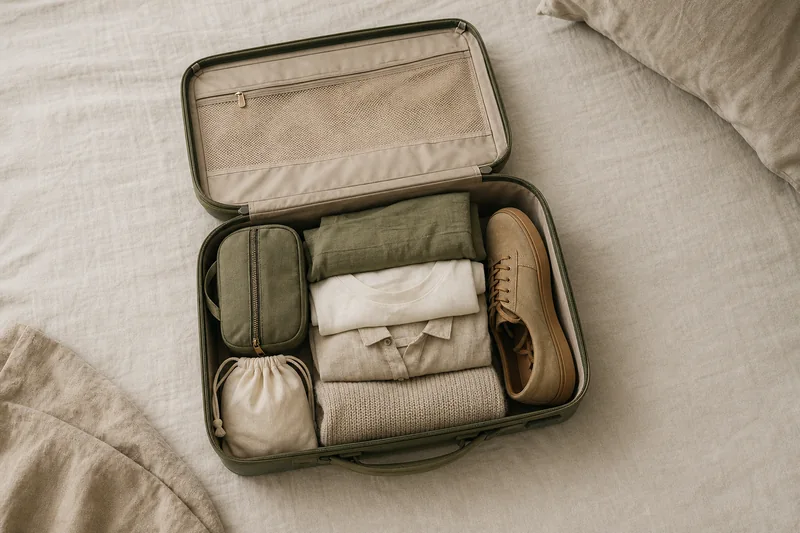
Keep clean clothes together and reserve a light pouch for worn items. Put chargers and small electronics in one predictable location. Pack the things you will need in transit near an opening, so that a security tray or delayed departure does not require unpacking the wardrobe.
A packing cube can help with retrieval, but it does not increase the airline’s allowance. Leave some breathing room for the shape of worn clothes, a damp item kept temporarily separate or a slightly rushed repack.
Check the whole route
Compare baggage entitlements for the outbound, connecting and return flights. GOV.UK directs passengers to their airline for the permitted number and size of cabin bags. Check weight too, where the airline specifies it. The outer packed dimensions matter more than a label describing the suitcase as cabin-friendly.
Rehearse carrying and lifting the loaded bag in a way that reflects your journey. If the result is uncomfortable, remove duplicate jobs, switch the bag or reconsider the baggage arrangement. A successful week in one carry-on is one in which the contents remain usable and manageable throughout the trip.
Start with the week preset in the packing list, then save what worked after you return.