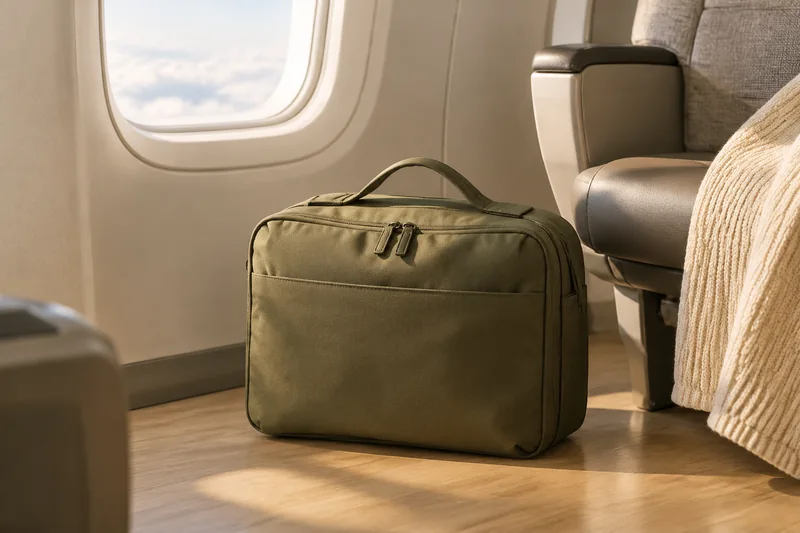
For an easyJet weekend, start with the small bag already included in your booking. If your packed belongings fit its size and weight limits, you may not need another bag. If they do not, compare a large cabin bag with hold luggage using the price for your own flights, the space you need and how you want to move through the airport.
There is no fixed winner on cost. easyJet says large-cabin-bag prices and availability vary by flight and booking time. A checked bag also changes your departure and arrival routine. The useful comparison is between two complete travel plans, rather than two suitcase names.
The rules below were checked against easyJet’s official pages on 6 November 2026. This guide covers ordinary passenger luggage, not sports equipment or special assistance arrangements. The cover is an illustrative scene, not a demonstration of an approved bag.
Know what you are comparing
The official cabin-bag policy distinguishes the included small bag from an additional large cabin bag. The hold-luggage page describes separately booked checked luggage.
| Option | Limits on the reviewed official pages | What changes for your trip |
|---|---|---|
| Included small cabin bag | 45 × 36 × 20 cm, including handles and wheels; up to 15 kg | Kept under the seat in front; you must lift and carry it yourself |
| Large cabin bag, with the relevant entitlement | 56 × 45 × 25 cm, including handles and wheels; up to 15 kg | Uses an overhead locker; confirm that it is booked or covered by your applicable benefit |
| Hold luggage | 15 kg or 23 kg options; extra weight can be added in 3 kg increments, with no single bag above 32 kg | Handed over at Bag Drop and collected after the flight; check your purchased allowance |
For hold luggage, the reviewed page also states that the sum of length, width and height must be under 275 cm. That is a different measurement from three separate cabin-bag limits. Do not apply it to a bag you intend to take into the cabin.
The large-cabin-bag row is not an entitlement for every ticket. Membership and fare arrangements have conditions, including space-dependent cases. Our easyJet allowance guide explains where to look; your current booking and the live official policy make the final distinction.
Try the included bag before buying an extra
Lay out clothing for the activities you have planned, then remove duplicate outfits and items supplied by your accommodation. Pack the shoes, chargers and toiletries as well as the clothes. A bag that fits an empty packing list can become too deep once its front pocket is full.
Use our weekend packing guide as a starting point, then measure the closed, packed bag. Weigh the bag itself together with everything inside it. If all three dimensions fit but you cannot comfortably carry the load, a different bag or fewer belongings may be more useful than extra capacity.
As an illustrative example, a traveller taking one change of clothes, a light layer and a small wash kit might manage with the included bag. Someone attending a formal event with a second pair of shoes may prefer more space. Neither example is a promise that a particular packing list will fit your bag.
When a large cabin bag makes sense
A large cabin bag is worth comparing when the included bag is too small, your packed load still meets the cabin limits, and you want to keep your main belongings with you. It can suit a trip with several accommodation changes, where you value a compact case beyond the airport too.
Check the entitlement on each flight before paying. Adding a bag to one booking does not demonstrate that it is attached to another. If a fare or membership benefit applies, read the conditions that match it rather than paying for a duplicate benefit.
Think about stairs, transfers and lifting as well as the flight. The reviewed cabin policy requires you to lift and carry your bag yourself. More available volume is not a reason to fill it with weight you cannot manage.
When hold luggage deserves a closer look
Hold luggage may suit bulkier clothing, a longer trip without laundry, or belongings that cannot travel in the cabin but are permitted in checked luggage. A hold allowance does not make a restricted item acceptable: check the airline’s item rules and the security rules for your route separately.
Build Bag Drop and baggage reclaim into your plan. Check your airport’s actual deadlines and arrangements rather than assuming a standard extra number of minutes. For an early flight or a tight onward train, that routine may matter as much as the luggage fee.
Keep travel documents, valuables and items needed during the flight accessible in your permitted cabin bag. IATA advises against putting valuable or irreplaceable items in checked baggage. Check item-specific restrictions before deciding where electronics belong; extra hold weight does not override them.
Compare the full price for the journey
Open your own booking options and write down these figures before purchasing:
- Large cabin bag: the additional price on the outbound and return flights, after checking any included benefit.
- Hold bag: the price for the weight you actually need on both flights, including any planned weight increase.
- Complete fare alternative: the difference in total fare if a bundle includes benefits you would otherwise buy.
- Your existing equipment: whether the plan works with a bag you own or requires another purchase.
Do not compare a one-way cabin price with a return hold price, or treat a fare bundle’s headline price as only a luggage charge. We do not give a universal fee here because a dated example could misstate the options available for your flight. easyJet’s reviewed pages recommend arranging luggage online before reaching the airport.
Make the choice, then check the return
Choose the smallest suitable plan that works for the trip you are actually taking. Save the confirmation showing what is included on each flight, recheck the live policy before departure, and leave room for anything you intend to bring home.
If your return uses another airline, repeat the comparison against that booking. Our one-bag, two-airlines worksheet turns the separate allowances into one packing decision without assuming the more generous flight covers the whole journey.