A short city break can produce a surprisingly large bag. You picture a gallery, a long lunch, a dressy dinner and a rainy morning, then pack a separate version of yourself for each. Start with the things those plans share: comfortable clothes, reliable shoes and a layer that works from morning to evening.
This plan is a practical example for two or three casual nights. It is not a universal clothing allowance. Change the quantities for your needs, the forecast and the activities you have actually booked.
Sketch the days before choosing the clothes
Write one line for each day: arrival and walking, a museum and dinner, breakfast and the journey home. Add any real dress requirement beside the relevant activity. If nothing calls for formal shoes, there is little reason to build a second footwear system around a dinner you have not booked.
Check opening times and reservations separately from packing. A smaller bag cannot fix a closed attraction, but a clear itinerary can prevent several unnecessary outfits. Keep booking details available offline so that finding them does not depend on airport or street Wi-Fi.
Use a compact outfit plan
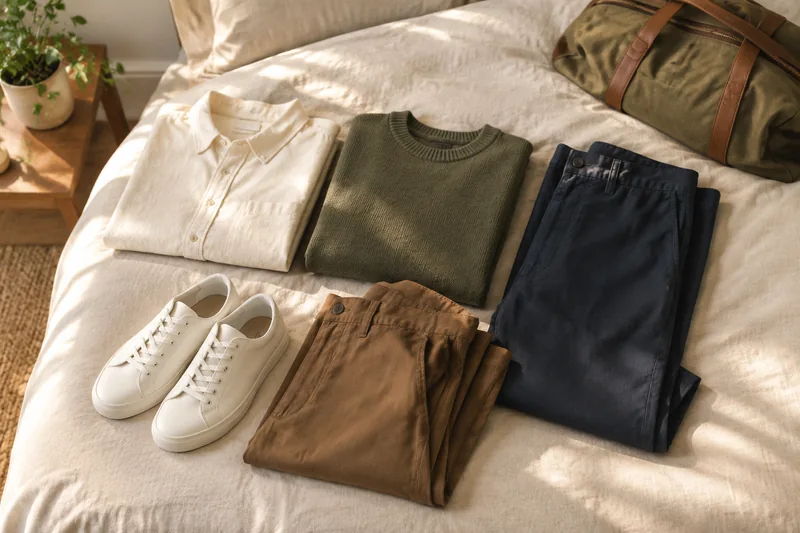
For a mild-weather weekend, you might wear one outfit and pack two tops, a spare bottom, underwear and sleepwear. Those are starting quantities, not a target to meet. A single dress or another personal favourite may replace several pieces if it suits the plans.
Choose combinations you already like wearing. Include the jacket and shoes in the check, because an outfit that works only with an extra bulky item may not be as versatile as it looks. A scarf or small accessory can change the feel of familiar clothes without consuming another compartment.
Make walking the footwear priority
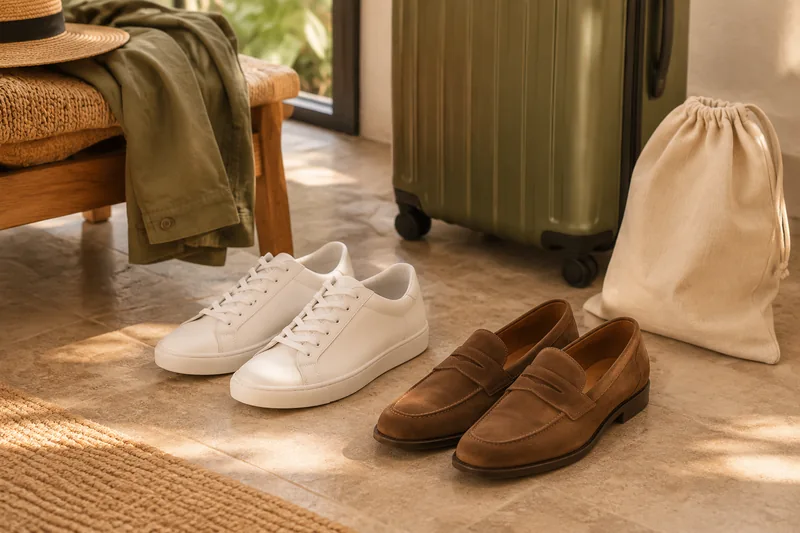
City days often involve more standing and walking than the itinerary suggests. Wear the pair you trust for that job. If a second pair is necessary, choose it for a specific use and keep it separate from clean clothes.
Do not make the trip a first test of unfamiliar shoes. Check the route from the station to your accommodation, especially if it includes steps or uneven streets. The shoe-packing guide helps you decide whether another pair earns its space.
Keep the day bag simple
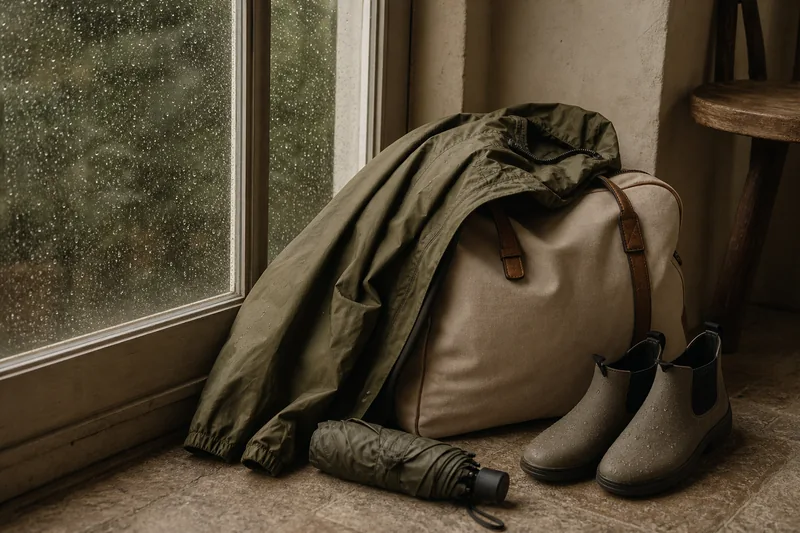
Carry only what you need while exploring: your payment method, phone, necessary documents, personal essentials and a weather layer if appropriate. Check any attraction’s current bag restrictions before arriving. A day bag is not useful if it brings the entire overnight kit into every café and gallery.
If you bring a separate day bag inside your cabin bag, remember that it still has weight and volume. Do not assume you can carry it as an additional piece on the flight; IATA says cabin allowances vary by airline.
Plan the last day as carefully as the first
Find out whether your accommodation can store luggage and on what terms. If it cannot, choose a bag you can comfortably carry until departure or investigate a legitimate storage service in advance. Avoid packing a delicate item that will dictate the entire final afternoon.
Leave a modest amount of room for a purchase you genuinely expect to make. If the bag is already full at home, buying a souvenir may require another baggage arrangement. The simplest departure check is to close the packed bag, carry it for a few minutes and confirm the allowance attached to every flight.
Use the weekend preset in the packing list and remove anything that has no clear role in these particular days.