A forecast with rain icons can make every item in the wardrobe seem necessary. Separate the problems before adding clothes. You may need to keep rain off, stay comfortable as the temperature changes and manage damp things afterward. A thoughtful layer and drying plan can be more useful than a second bag of spare outfits.
This is a guide for ordinary travel planning. Exposed hiking, severe weather and specialist outdoor activities need equipment and advice appropriate to the actual conditions. A compact city kit is not a substitute for that preparation.
Read more than the rain symbol
Check the forecast for the places and times you will actually be outside. Look at temperature, wind and the expected pattern of rain. A brief shower between indoor visits is a different packing problem from a full day of walking in cold rain.
Review the forecast again close to departure. Keep the itinerary flexible where you can: booking a long exposed activity leaves fewer options than alternating outdoor stops with indoor ones. No garment removes the need to change plans when conditions become unsuitable.
Choose a rain layer for the activity
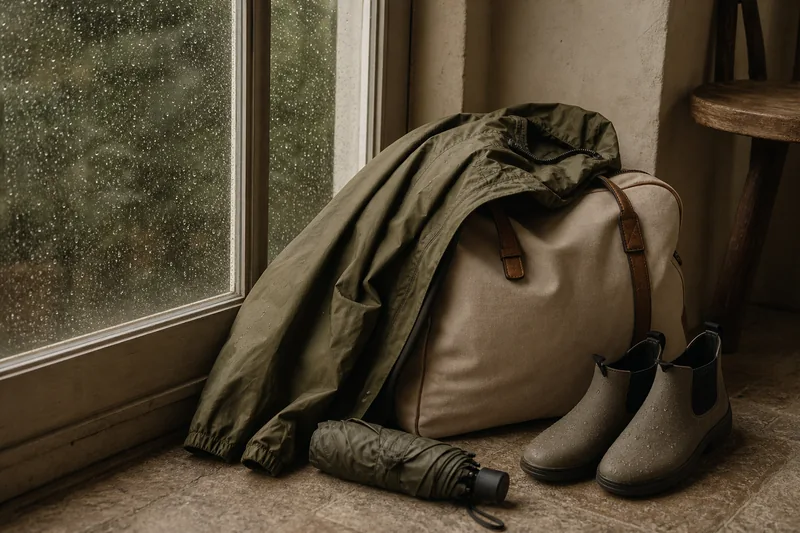
Read the garment’s stated features and care instructions. A casual jacket described as water-resistant may serve a different purpose from a rain shell intended for prolonged exposure. Do not infer performance from how technical a jacket looks.
Try the layer over the clothes you plan to wear. Check whether the hood, sleeves and closure are comfortable and whether you can move freely. If you already own a suitable jacket, use it; this packing plan does not require buying a new one.
Give footwear some attention
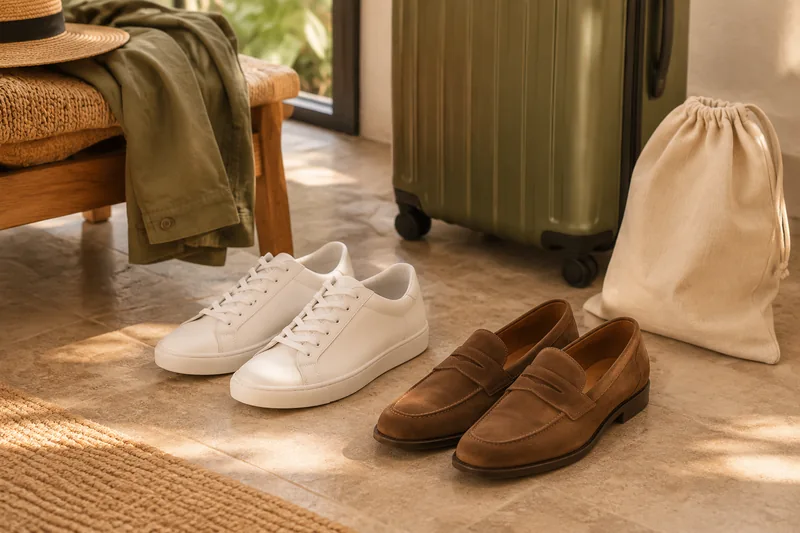
Choose shoes that suit the walking, surfaces and weather you expect. Wear them before the trip so you understand their comfort. A shoe that is slow to dry may become inconvenient if it is the only pair you bring, while a second bulky pair can dominate a small bag.
Decide which trade-off fits the route. For a short city break, arranging time to dry one pair may be practical. For a trip with repeated wet outdoor days, you may need a different system. Follow the maker’s cleaning and drying guidance rather than placing shoes against a heater.
Keep dry and damp items separate
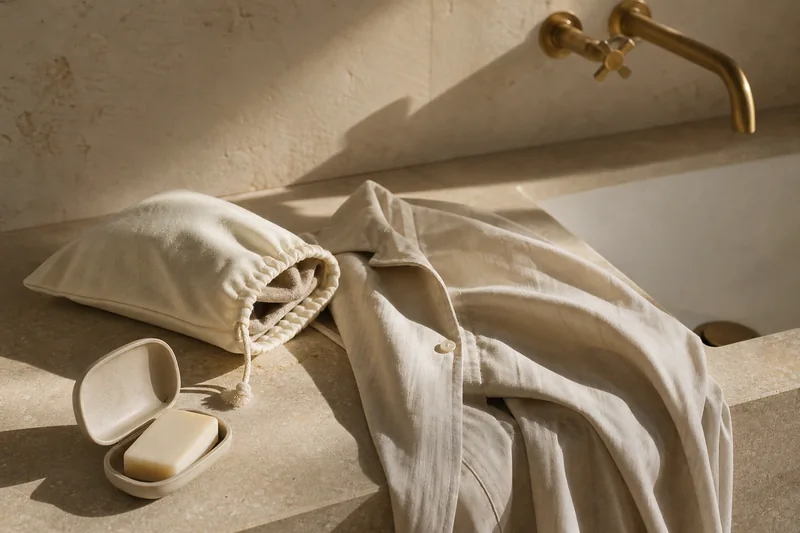
A small bag or pouch can keep a damp jacket from brushing clean clothing during a short transfer. Take the item out to dry when you reach suitable space; sealing wet clothes away for the rest of the trip is not a drying method.
Check whether your accommodation has somewhere appropriate to hang things. Avoid dripping onto floors, furniture or other people’s belongings. Keep electronics in a suitable protective pouch and follow the device maker’s guidance; an ordinary fabric organiser should not be assumed waterproof.
Make the umbrella decision deliberately
An umbrella may be useful for short city walks, especially when you want quick cover without changing layers. It can also be awkward in wind or on crowded routes. Check your airline’s allowance and your activity’s restrictions rather than assuming it can travel as an extra item.
You may reasonably choose a shell, an umbrella or both. The decision should come from your itinerary and preferences, not a rule that every light traveller uses the same kit.
Repack for the journey home
Allow time to dry what you can before closing the bag. Keep anything still damp separate for the transfer and unpack it promptly at home. Review what you used: the spare pieces that stayed untouched may be easy omissions next time, while a reliable layer may have earned a permanent place.
Add the items your forecast requires to the packing list and use the laundry guide to plan the less glamorous drying part.