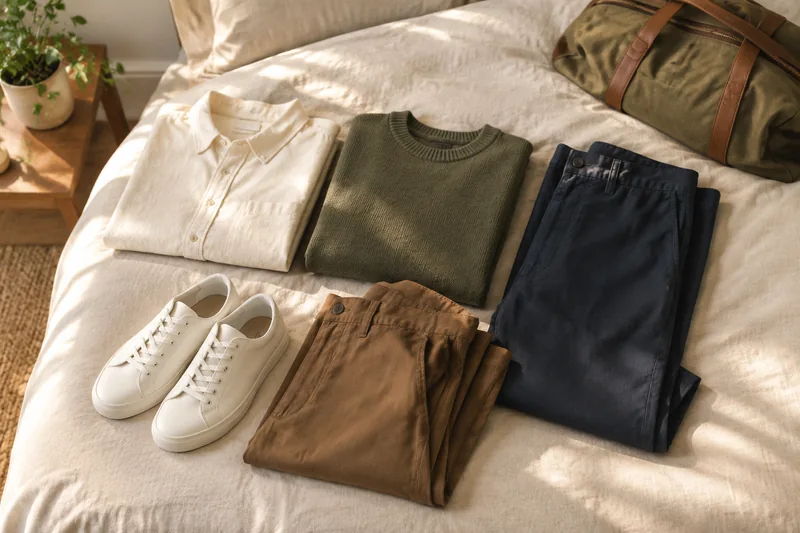
Shoes are awkward packing objects: they are shaped differently from folded clothing and can carry dirt or moisture. Choosing them well can simplify the whole bag, but a smaller shoe collection is useful only if it still meets the trip’s real needs.
This is a practical packing framework, not footwear or medical advice. Choose shoes that suit you and your planned activities. Do not replace specialist or personally necessary footwear with a compact pair merely to save space.
Start with the walking you will do
Look beyond the flight. Consider transfers, daily walking, work requirements, planned events and the surfaces you expect to use. A pair suitable for a short dinner outing may not be comfortable for a long sightseeing day.
Wear the intended main pair before departure. Check comfort with the socks you will use and the kind of day you are planning. A new pair that has only been tried on briefly is an uncertain foundation for a busy trip.
Give each additional pair a job
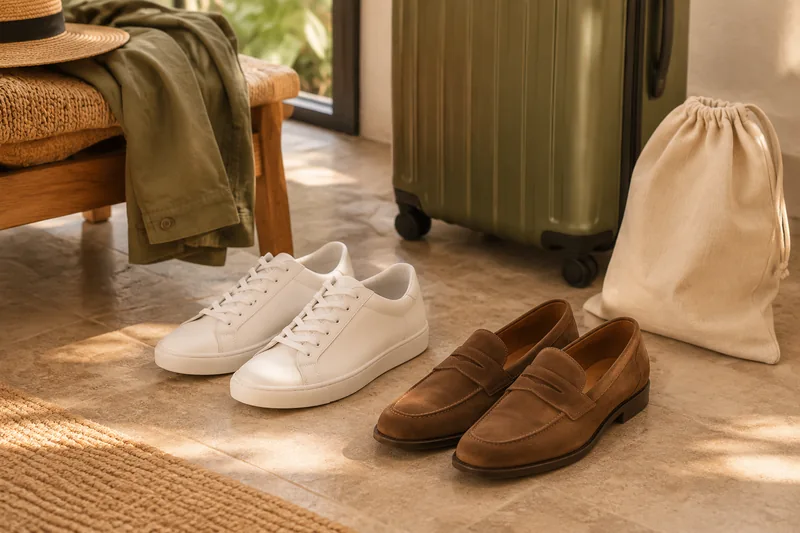
Write the reason for bringing a second pair in one sentence. “Required for the event” is concrete. “It might look nice with something” is worth checking against the clothes you have actually chosen.
One pair may work across several casual settings. Another trip may need a genuine change of footwear. Avoid turning either possibility into a universal one-pair or two-pair rule. Your needs and itinerary are the basis of the decision.
| Planned use | Question to answer |
|---|---|
| Everyday walking | Is the pair comfortable for your expected route? |
| Work or a formal event | Does it meet the actual dress requirement? |
| Rain or cold | Is the footwear suitable for the conditions? |
| A specialist activity | Is specific equipment required or available appropriately? |
Wear the bulky pair when it makes sense
Wearing a larger pair can leave more room in the bag, but only if it is comfortable for the journey. Do not make a long transfer unpleasant just to improve a packing photograph. Check whether you can remove and put on the shoes easily if required during screening, following current staff instructions.
If an extra pair is packed, separate it from clean clothes with a suitable lightweight bag or cover. Keep dirty soles away from fabric. Heavy rigid shoe cases can add substantial bulk, so compare the protection you need with the space available.
Use the shape without creating a mess
Pack the shoes where their shape fits naturally. You may be able to place small clean items inside them if those items are enclosed and the shoes are dry, but do not treat every hollow as a space that must be filled.
Avoid crushing footwear that needs to keep its shape or pushing it against fragile belongings. Soft shoes and structured shoes have different storage needs. Follow the manufacturer’s care guidance where relevant rather than assuming that bending or flattening is harmless.
Plan for wet or dirty footwear
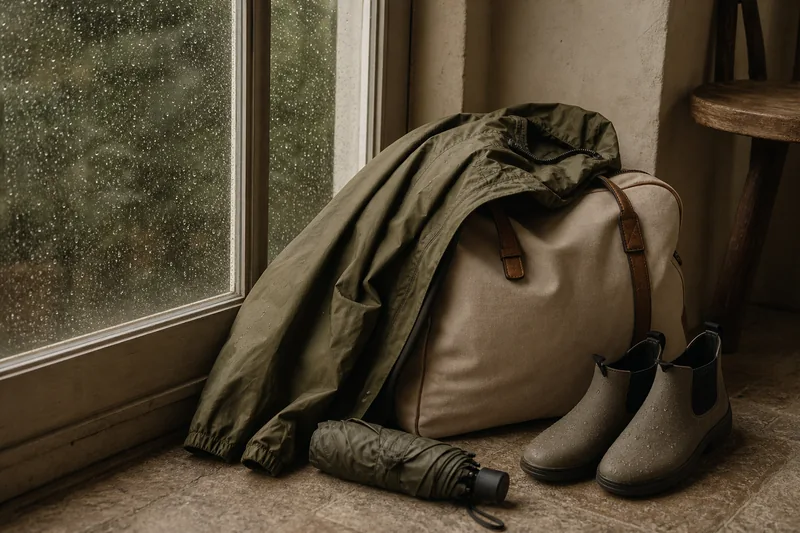
If the itinerary involves rain, beaches or muddy paths, consider how you will separate shoes on the return journey. A simple washable cover may help contain dirt, but wet footwear still needs appropriate drying. Do not promise that a sealed pouch will solve moisture or odour indefinitely.
When you return, note which pair you actually wore and why. That information helps you make a better choice next time. If the spare pair remained untouched, ask whether it was a sensible contingency or a habit. If you needed it repeatedly, it probably earned its place.
Complete the rest of the clothing plan with the travel capsule wardrobe guide and the rainy-weather packing plan.